





© Ali Abbasian
Website Designed ByA broken ankle is one of the most common fractures I treat. I treat ankle fractures in London, at Guy’s and St Thomas’ and in private practice at HCA hospitals. Some heal well in a boot. Others are unstable and need an operation to put the joint back in place and hold it there while the bone heals. This page explains how I decide, what the surgery involves, the risks and what recovery is really like.
Fracture and break mean the same thing. An ankle fracture often happens when the ankle twists during an injury or fall.
On this page
No. If the ankle joint is stable and the bones are in a good position, the fracture can usually be treated in a boot, with X-rays to check it has not moved. You may need repeat X-rays at one week and sometimes two weeks after the injury to check that the bones remain in a good position.
I normally recommend surgery when the ankle is unstable. This includes:
Position matters because the ankle is a tightly fitting joint. Laboratory work has shown that if the ankle bone (talus) sits just 1 mm out of place, the contact area inside the joint falls by about 40%. Over time, that extra load wears the cartilage and leads to arthritis. The aim of surgery is to restore the joint accurately and let you move the ankle sooner.
The operation is called open reduction and internal fixation (ORIF). I realign the broken bones and hold them with plates and screws. What I use depends on which parts of the ankle are broken:
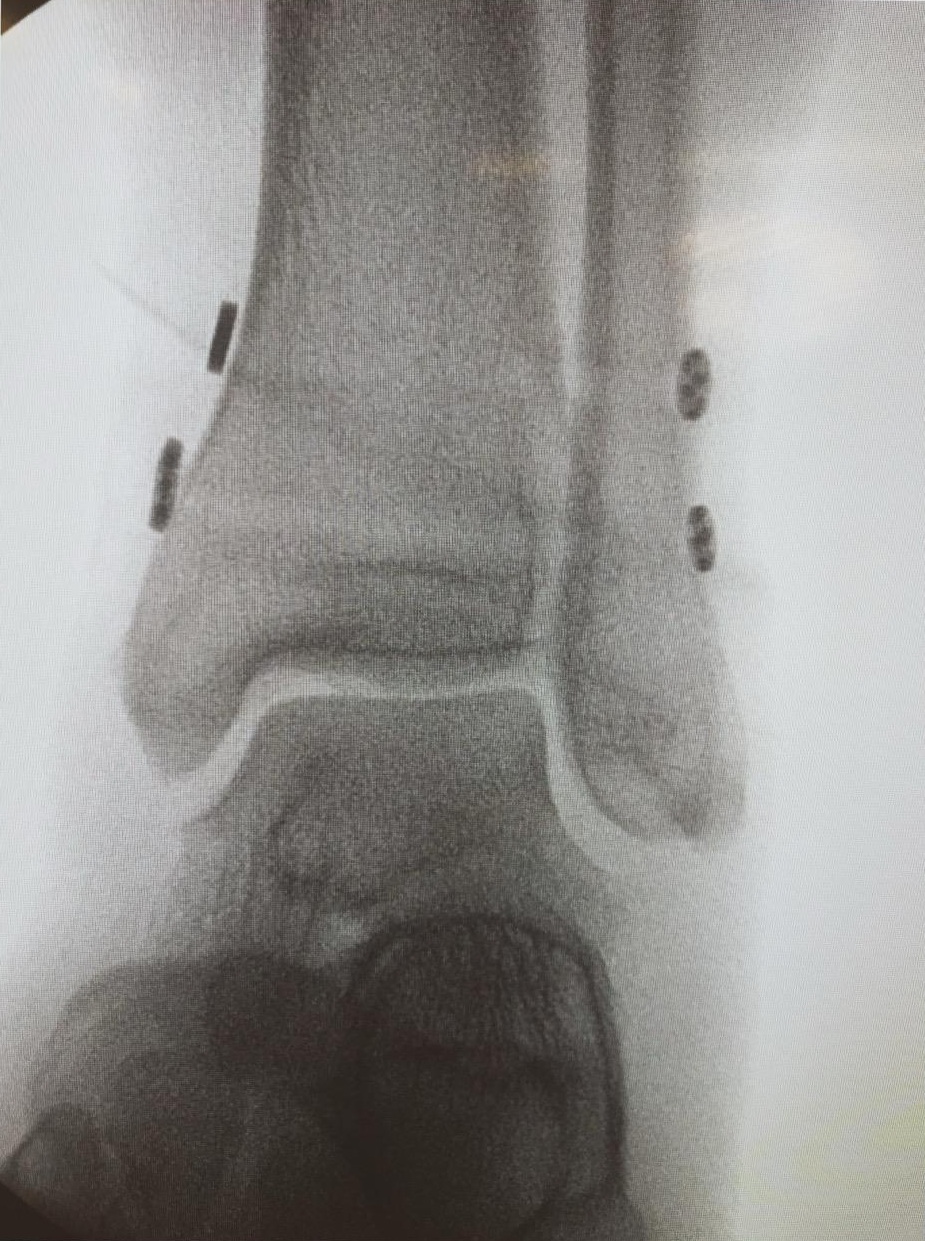
Surgery is done under a general anaesthetic with a nerve block for pain relief. Most patients stay in hospital for a day or two.
If the ankle is very swollen or the skin has blistered, it is safer to wait until the swelling settles. Occasionally the ankle needs a temporary external frame first.
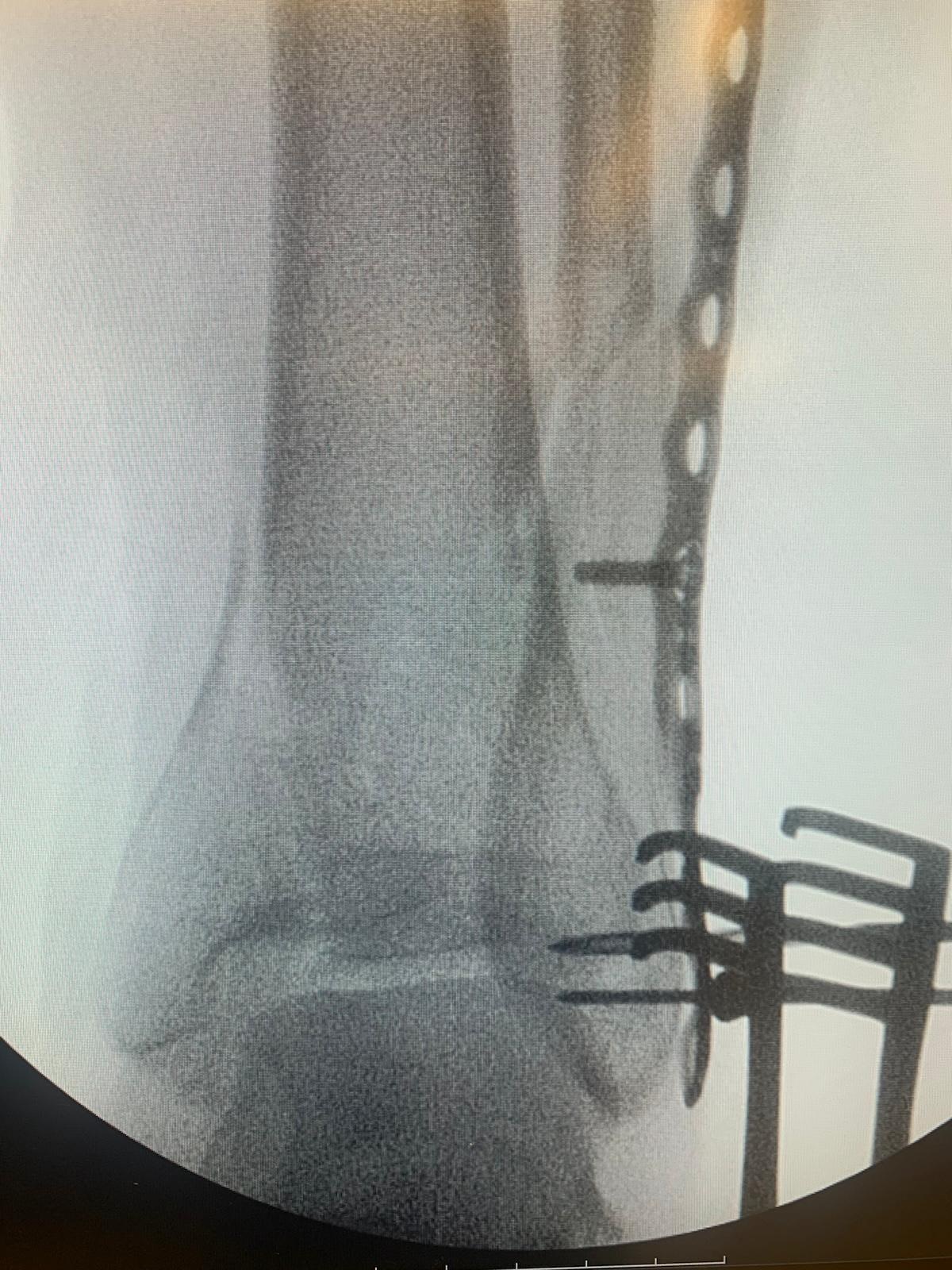
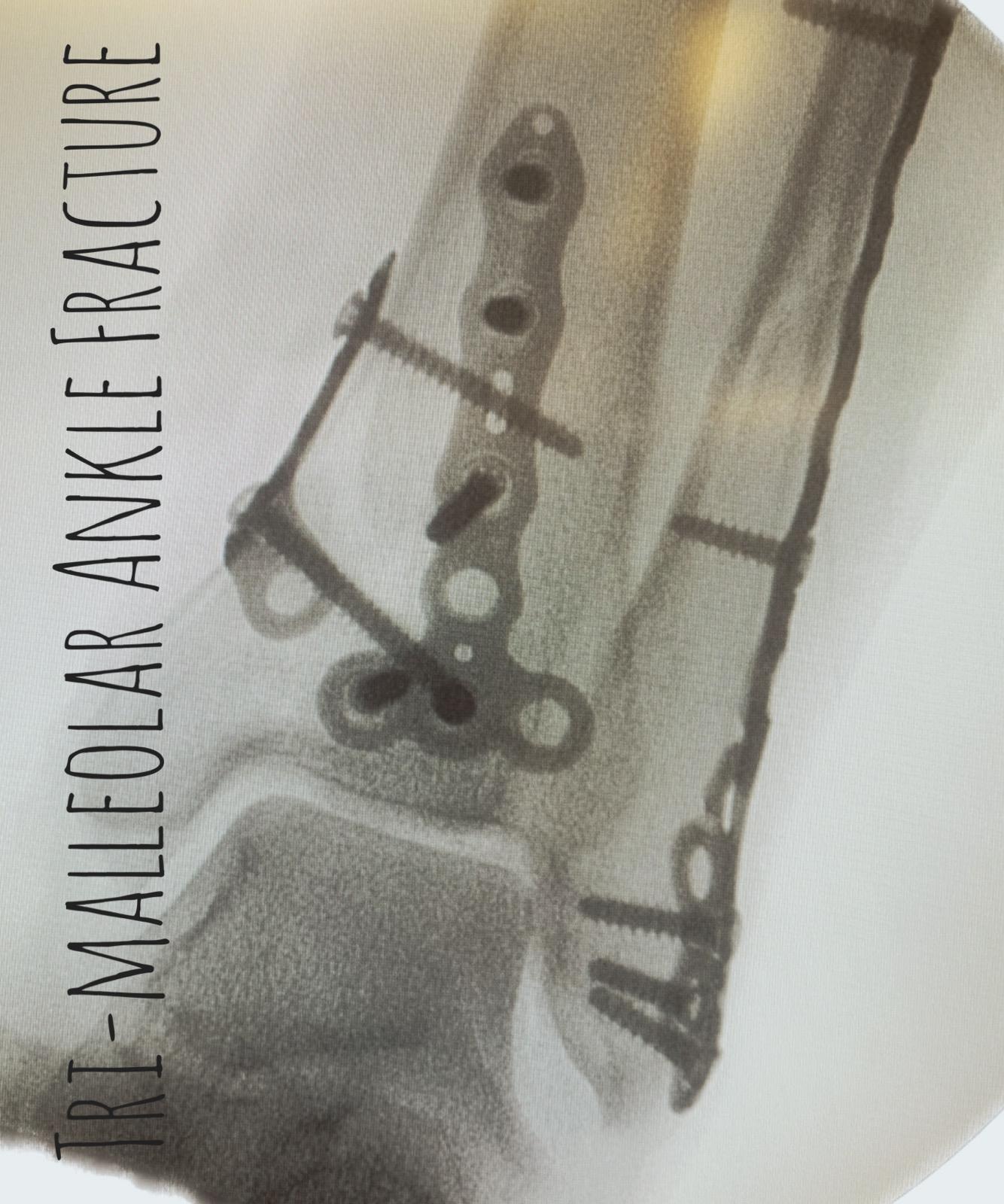
Most patients have no serious complication. In a national study of more than 83,000 ankle fracture operations in Finland, about 7 in 100 patients had a complication needing hospital care in the first four months. The main risks are:
The risks are higher if you smoke or use any nicotine product, have diabetes, poor circulation, kidney disease or obesity, are over 75, or had an open fracture. Stopping nicotine and keeping blood sugar well controlled are the two things that make the biggest difference.
Every fracture is different, and I adjust the plan to your injury and the quality of your bone. A typical timeline is:
Physiotherapists will check that you can use crutches or a walking frame safely after surgery. Follow your physiotherapy exercises and the individual advice you are given.
Clot prevention: all my patients are given blood-thinning medication after surgery.
Driving: you cannot drive in a boot. You need to be out of it and able to do an emergency stop safely, which takes longer if it is your right ankle. Check with your insurer before you start again.
Most patients improve a great deal, and most of that improvement comes in the first year. I think it is important to be honest about the rest. Swelling, stiffness and aching after activity can last many months. Recovery tends to level off at about two years, and for many people the ankle ends up good but not quite as it was before the injury.
How severe the fracture was makes a difference. In a study that followed patients for 15 to 22 years after surgery, about 3 in 10 of those with a trimalleolar fracture had a moderate or poor result, compared with about 1 in 20 of those with a single broken bone. If symptoms persist, the usual causes are prominent metalwork, stiffness or early ankle arthritis, and all of these can be treated.
Most ankle fracture operations go well, but the detail matters. In a study of more than 5,000 ankle fracture operations in Finland, fewer than 2 in 100 patients needed an early second operation because the bones were not in the right position. The most common problems were with the syndesmosis and with restoring the length of the fibula.
These are the parts of the operation I pay most attention to. I am the clinical lead for foot and ankle surgery at Guy’s and St Thomas’, I have a research interest in the syndesmosis, and I regularly see patients for a second opinion after fracture surgery elsewhere. I test the syndesmosis under X-ray during every ankle fracture operation and stabilise it if it is unstable.
I see many patients for a second opinion after an ankle fracture. Common reasons are:
Please bring any X-rays, scans and operation notes you have. I use ultrasound in clinic and can arrange CT or MRI where needed.
After surgery, contact my team or the hospital straight away if you have:
Call 999 or go to A&E if you have chest pain or shortness of breath.
Read more on the British Orthopaedic Foot and Ankle Society website in its patient guide to ankle fractures. It gives general advice; your own plan will depend on your injury and surgery.
Request an appointment or message us on WhatsApp.